


Rodolphe Saadé and Greg Hayes are business executives whose careers reflect two different sides of the global economy. Saadé is best known for leading CMA CGM, an international shipping and logistics group, while Hayes built his executive career in aerospace, defense, finance, and industrial management. Their professional histories offer an interesting comparison of how leaders manage large organizations operating in complex international markets.
Although both executives have worked in industries connected to transportation and global supply chains, their careers have followed different paths. Saadé has expanded a family-founded shipping business into a broader logistics operation, while Hayes played a major role in reshaping United Technologies Corporation (UTC) and bringing together businesses that formed RTX.
There is no verified public evidence establishing a direct business partnership between the two men. Their stories are worth examining separately, however, because they illustrate different approaches to corporate growth, acquisitions, leadership, and long-term business strategy.
Quick Facts: Rodolphe Saadé and Greg Hayes
| Fact | Rodolphe Saadé | Greg Hayes |
|---|---|---|
| Profession | Business executive | Business executive |
| Birthplace | Lebanon | United States |
| Education | Concordia University | Purdue University |
| Known For | Leading CMA CGM Group | Leading UTC and RTX |
| Industry | Shipping and logistics | Aerospace and defense |
| Notable Role | Chairman and CEO of CMA CGM | Former CEO and executive chairman of RTX |
| Business Focus | Global shipping, logistics, and transportation | Aerospace technology, defense, and industrial strategy |
| Career Highlight | Expanding CMA CGM into broader logistics services | Helping establish RTX in 2020 |
Rodolphe Saadé: Background and Early Career
Rodolphe Saadé was born in Lebanon in 1970 and studied business and marketing at Concordia University in Montreal, Canada. His early professional experience included establishing a water-dispenser business before joining CMA CGM in 1994. The company had been founded by his father, Jacques Saadé, in Marseille, France, in 1978.

Joining an established family business gave Saadé an opportunity to learn about international commerce from within the organization. Rather than moving directly into the top leadership position, he took on responsibilities across shipping operations and different markets. These assignments helped him develop experience in the company’s core activities and understand the practical challenges of international transportation.
His career progression included managing shipping lines between 1997 and 2000 and later taking responsibility for transatlantic and transpacific routes. He also worked in the United States and Hong Kong before returning to Marseille. This international experience became an important part of his professional development.
Saadé’s early career is significant because it combined entrepreneurial experience with operational management. His later leadership decisions would build on both areas, particularly when the company began expanding beyond traditional maritime shipping.
Rodolphe Saadé’s Rise in the Shipping Industry
Saadé became CEO of CMA CGM in 2017 and was appointed chairman and CEO in November of that year. His leadership has focused on expanding the group’s activities across maritime transport, logistics, air freight, and related supply-chain services.
One of the defining features of his business strategy has been diversification. Container shipping remains central to CMA CGM, but the group has also invested in services that help businesses move, store, and distribute goods through different stages of the supply chain.
Several developments illustrate this approach:
-
CEVA Logistics: CMA CGM completed a public tender offer for CEVA Logistics in 2019, strengthening its position in logistics services.
-
Air cargo: In 2021, the group announced the creation of its air cargo division, adding another transportation option to its international network.
-
Logistics expansion: In 2022, the group pursued acquisitions involving Ingram CLS, GEFCO, and Colis Privé to expand its activities in e-commerce, automotive logistics, and last-mile delivery.
-
Strategic shipping partnerships: Saadé was involved in negotiations that led to the Ocean Alliance operating agreement, bringing together CMA CGM with other major shipping companies.
These developments show how CMA CGM has broadened its services beyond ocean freight. Companies trading internationally often need several connected services, from shipping containers across oceans to transporting goods inland and delivering them to customers. A wider logistics network allows CMA CGM to serve more of those needs.
Saadé has also emphasized innovation and environmental initiatives. The group has announced investments in alternative-fuel vessels and other measures intended to support its longer-term carbon objectives. These efforts reflect the pressures facing the shipping industry as companies seek to reduce environmental impacts while continuing to move goods worldwide.
CMA CGM and Its Global Business Influence
CMA CGM is the central organization in Saadé’s professional story. Founded in Marseille by Jacques Saadé, the group grew from a regional maritime operation into an international shipping and logistics business. Its expansion reflects the growth of containerized transportation and the increasing importance of interconnected supply chains.
Under Rodolphe Saadé, the company has continued developing its presence in shipping, port terminals, logistics, and air freight. These activities serve different parts of international commerce, including manufacturers, retailers, and companies that rely on moving products between countries.
The company’s strategy also illustrates why diversification matters in transportation. Shipping rates, fuel costs, port congestion, geopolitical disruptions, and changing consumer demand can all affect business performance. Offering logistics and other transportation services may provide more ways to serve customers, although it also brings additional operational and financial challenges.
Saadé’s leadership therefore involves more than managing ships and shipping routes. It includes decisions about investment, acquisitions, technology, environmental priorities, and the coordination of a business operating across multiple markets.
Greg Hayes: Background and Professional Journey
Gregory J. Hayes, commonly known as Greg Hayes, developed his career in finance and industrial management before becoming a leading figure in the aerospace and defense industry. He earned a bachelor’s degree in economics from Purdue University and is a certified public accountant.
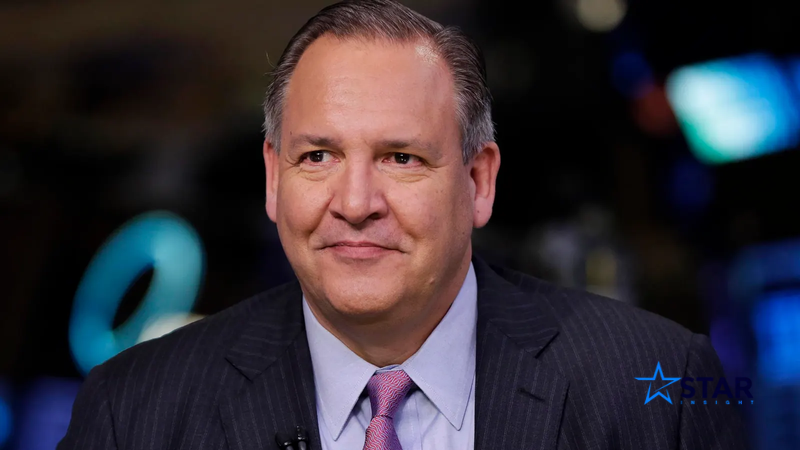
Hayes joined United Technologies Corporation in 1999 through its merger with Sundstrand Corporation. His career at UTC included senior positions in finance, corporate strategy, and business development. He became the company’s chief financial officer in 2008 and served in that role until 2014, when he was appointed CEO. He became chairman in 2016.
His financial background was particularly relevant to the responsibilities he later assumed. Large industrial companies must make decisions about capital investment, acquisitions, operating costs, research, and long-term product development. Understanding financial performance and business operations is essential when managing organizations with complex manufacturing networks and substantial research requirements.
Hayes’s rise also reflects the importance of experience across different corporate functions. His background was not limited to accounting; it extended into strategy, acquisitions, and the restructuring of a major industrial business.
Greg Hayes’ Leadership at UTC and RTX
A major chapter of Hayes’s career involved reshaping UTC and helping establish RTX. In 2020, United Technologies combined its aerospace businesses, including Pratt & Whitney and Collins Aerospace, with Raytheon Company to form Raytheon Technologies, subsequently known as RTX. Hayes led the company as chairman and CEO following the combination.
The combination brought together businesses involved in aircraft engines, aerospace systems, and defense technologies. Integrating large organizations of this kind requires decisions about corporate structure, investment priorities, operations, and how different business units work together.
Hayes’s broader transformation strategy also involved separating UTC’s non-aerospace businesses. Otis Elevator Company and Carrier Corporation were spun off in 2020, while earlier moves included the divestiture of Sikorsky Aircraft in 2015 and the acquisition of Rockwell Collins in 2018. These transactions helped shift UTC toward a more focused aerospace business before the creation of RTX.
Hayes’s later responsibilities changed as RTX’s leadership evolved. He became RTX’s executive chairman in May 2024 after serving as CEO. In 2025, he stepped down from the executive chairman role, and Christopher Calio succeeded him as chairman. Hayes subsequently served as a special adviser to the RTX CEO until January 2, 2026. His current board positions include Phillips 66 and Becton, Dickinson and Company.
This transition is important when discussing Hayes today: he should not be described as the current CEO of RTX. His most notable executive achievements are associated with his earlier leadership at UTC and RTX, while his more recent work includes corporate governance and board responsibilities.
Rodolphe Saadé and Greg Hayes: A Side-by-Side Comparison
Although Saadé and Hayes have worked in different industries, their careers share several broad themes, including international operations, large-scale investment, strategic decision-making, and organizational change.
| Comparison | Rodolphe Saadé | Greg Hayes |
|---|---|---|
| Main business association | CMA CGM Group | United Technologies and RTX |
| Core industry | Shipping and logistics | Aerospace and defense |
| Educational background | Business and marketing | Economics and accounting |
| Career starting point | Entrepreneurial venture, followed by CMA CGM | Finance and industrial management |
| Major strategic focus | Expanding shipping into broader logistics services | Restructuring industrial businesses and consolidating aerospace operations |
| Notable development | Expansion into CEVA Logistics and air cargo | Formation of RTX in 2020 |
| Current professional focus | Chairman and CEO of CMA CGM | Corporate board roles and governance |
The comparison is based on the executives’ published corporate biographies and company records.
The key distinction is the business problem each executive has addressed. Saadé’s work has centered on connecting transportation and logistics services to support international trade. Hayes’s major executive decisions involved reorganizing industrial businesses and combining aerospace and defense operations.
Neither career should be treated as a direct measure of the other’s success. Their responsibilities, markets, and business models are different, so their achievements are best understood within their respective industries.
Leadership Styles and Business Decisions
Saadé’s emphasis on expansion and diversification
Saadé’s record at CMA CGM demonstrates an emphasis on expanding the company’s reach across the supply chain. Investments in logistics, air cargo, and delivery services have helped the group develop a broader portfolio than maritime transportation alone.
This strategy can create opportunities to serve customers at multiple stages of moving goods. However, diversification also introduces challenges, including integrating acquisitions, managing different business models, and allocating capital across operations with different financial needs.
Hayes’s emphasis on restructuring and consolidation
Hayes’s executive record at UTC and RTX highlights a different approach: simplifying a large industrial portfolio and concentrating on aerospace and defense. The separation of Otis and Carrier, followed by the formation of RTX, illustrates how corporate restructuring can change the focus and organization of a business.
Such transactions require more than financial planning. They can involve operational integration, workforce decisions, customer relationships, and long-term investment commitments. The creation of RTX brought together businesses with different capabilities under a shared corporate structure.
What their careers have in common
Their professional histories suggest several broad lessons about leading large organizations:
-
Strategic focus matters: Business leaders must decide which activities deserve investment and which no longer fit the company’s direction.
-
Acquisitions require integration: Buying a company is only one step; realizing the intended benefits depends on combining operations effectively.
-
International operations create complexity: Large organizations must respond to changing market conditions, regulations, customers, and supply chains.
-
Leadership evolves: Executives may move from operational responsibilities to broader corporate governance roles as their careers progress.
These are general observations drawn from their documented career decisions, not claims that the two executives share a personal relationship or identical leadership philosophies.
Their Influence on the Global Economy
Shipping and aerospace serve different purposes, but both are important to the global economy.
CMA CGM operates in a sector that supports international trade by transporting goods across oceans and coordinating logistics services. The availability and cost of shipping can affect manufacturers, retailers, commodity suppliers, and consumers. Disruptions to shipping routes or port operations can also affect delivery schedules and supply-chain costs.
Saadé’s business activities are therefore connected to the movement of physical goods around the world. The company’s expansion into logistics and air cargo reflects the need for transportation providers to respond to changing customer expectations and supply-chain requirements.
Hayes’s former executive responsibilities involved businesses that design, manufacture, and support aerospace and defense technologies. Aircraft engines and aerospace systems are essential to commercial aviation, while defense technologies serve national security requirements. These markets depend on engineering expertise, manufacturing capacity, long development cycles, and significant investment.
The two executives’ careers demonstrate different ways that large companies participate in global economic activity. One is closely associated with the transportation of goods; the other is associated with the industrial technologies used in aviation and defense.
Business Achievements and Long-Term Legacies
Rodolphe Saadé’s business legacy
Saadé’s leadership is closely linked to CMA CGM’s expansion beyond its traditional shipping activities. The company’s investments in CEVA Logistics, air cargo, and other logistics operations show an effort to build a more integrated transportation and supply-chain business.
His long-term legacy will be shaped by how effectively the group manages this wider portfolio. Important considerations include operational efficiency, financial performance, customer service, environmental commitments, and the ability to adapt to changes in international trade.
Because CMA CGM remains an active business, its future development will continue to influence how Saadé’s leadership is assessed.
Greg Hayes’s business legacy
Hayes’s legacy is associated primarily with the transformation of UTC and the formation of RTX. His leadership helped reorganize a diversified industrial company and bring major aerospace businesses together under a new corporate structure.
That transformation created a different organizational focus for the businesses involved. Its long-term significance depends on factors such as operational integration, product development, customer demand, financial performance, and the company’s ability to meet requirements in the aerospace and defense markets.
Hayes’s subsequent move into board roles also reflects a common path for experienced executives: applying their financial, strategic, and operational backgrounds to corporate oversight after leaving day-to-day executive leadership.
Neither man’s legacy can be reduced to one acquisition or appointment. Both careers involve multiple decisions whose effects unfold over time.
Is There a Business Connection Between Rodolphe Saadé and Greg Hayes?
There is no verified public evidence establishing a direct business partnership, joint venture, or shared corporate leadership role between Rodolphe Saadé and Greg Hayes. Their names can be discussed together as part of a comparison of international business leadership, but that does not establish a personal or professional relationship.
Saadé’s principal business association is CMA CGM, while Hayes’s executive career was centered on UTC and RTX. Their professional backgrounds overlap in the broader world of transportation and industrial operations, but the companies they have led operate under different business models and serve different markets.
For readers researching both executives, it is important to distinguish a career comparison from a documented business connection. Any future claim of a direct relationship should be supported by reliable reporting, company announcements, or corporate records.
What Makes Their Career Stories Different?
The most important difference is the direction of their corporate strategies.
Saadé has overseen the expansion of a shipping group into a wider network of logistics and transportation services. His work involves connecting maritime freight, logistics, air cargo, and other services within a business serving international trade.
Hayes, by contrast, became known for restructuring major industrial businesses and helping form RTX. His career involved financial management, corporate transactions, and the integration of aerospace and defense operations.
Their stories also differ in their current responsibilities. Saadé continues to lead CMA CGM, whereas Hayes has moved away from executive leadership at RTX and into corporate board work.
For readers interested in business biographies, these differences offer a useful way to understand the executives without assuming they share a direct connection or identical career goals.
Frequently Asked Questions
Who is Rodolphe Saadé?
Rodolphe Saadé is a business executive who serves as chairman and CEO of CMA CGM Group, an international shipping and logistics company. He joined the family-founded business in 1994 and became its CEO in 2017.
Who is Greg Hayes?
Greg Hayes is an American business executive known for his former leadership roles at United Technologies Corporation and RTX. His career included senior financial positions, the CEO role at UTC, and leadership during the formation of RTX. He now holds corporate board positions, including at Phillips 66 and Becton, Dickinson and Company.
Are Rodolphe Saadé and Greg Hayes business partners?
No direct business partnership between the two has been verified in the public records reviewed for this article. Their names can be compared because of their prominent corporate careers, but a shared industry interest does not establish a business relationship.
What company does Rodolphe Saadé lead?
Saadé leads CMA CGM Group as chairman and CEO. The group operates in container shipping, logistics, port terminals, and air cargo, among other transportation-related activities.
What was Greg Hayes known for at RTX?
Hayes was known for leading RTX after its formation in 2020 and for his earlier work restructuring UTC. The merger brought together Raytheon Company with UTC’s aerospace businesses, including Pratt & Whitney and Collins Aerospace.
Is Greg Hayes still the CEO of RTX?
No. Hayes left the RTX CEO role in 2024 and subsequently stepped down as executive chairman in 2025. His special-adviser role at RTX ended on January 2, 2026, according to his published corporate biography.
What industries are associated with Rodolphe Saadé and Greg Hayes?
Saadé is primarily associated with shipping, logistics, and transportation services. Hayes’s executive career is associated with aerospace, defense, finance, and industrial management.
What can readers learn from comparing their careers?
Their careers illustrate two distinct approaches to managing large businesses: expanding an international shipping and logistics network and restructuring industrial companies around aerospace and defense. Comparing their documented decisions helps explain how corporate strategy varies between industries.
Conclusion
Rodolphe Saadé and Greg Hayes represent two different paths through international business leadership. Saadé’s career is closely tied to the expansion of CMA CGM into a broader shipping and logistics group, while Hayes’s executive record reflects the restructuring of UTC and the creation of RTX.
Their careers share themes of strategic decision-making, major corporate transactions, and managing complex organizations. However, their business histories remain distinct, and no direct partnership between them has been verified in the public records reviewed here.
Understanding that distinction makes the comparison more informative. Rather than presenting the executives as connected business partners, their stories offer separate perspectives on how leaders shape companies operating in different parts of the global economy.







Leave a Reply