


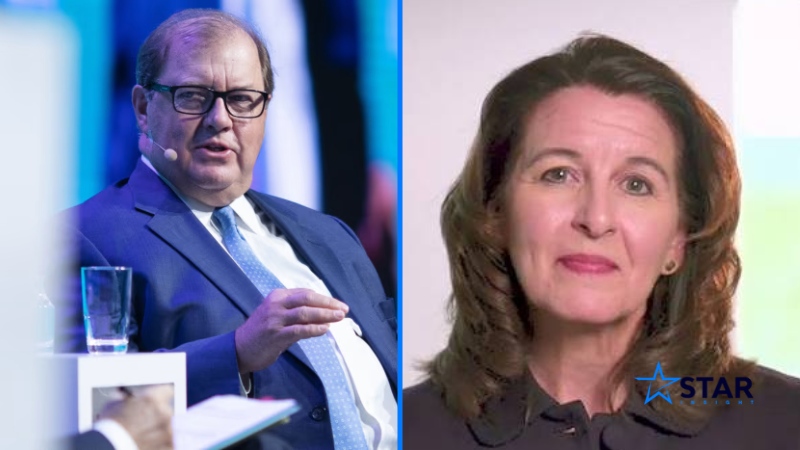
Maria Asuncion Aramburuzabala and Susan Wojcicki are two prominent women whose careers brought them recognition in very different parts of the business world. Aramburuzabala is a Mexican businesswoman and investor known for her family’s connection to Grupo Modelo and her work through Tresalia Capital. Susan Wojcicki was an American technology executive who helped shape Google’s early development and later served as the CEO of YouTube. Although their names may appear together in online searches, their professional backgrounds tell two separate stories.
The question of whether Maria Asuncion Aramburuzabala and Susan Wojcicki shared a personal or professional relationship is worth examining carefully. There is no established public evidence confirming that they were relatives, close friends, business partners, or colleagues. However, their careers provide an opportunity to explore two different approaches to leadership, business growth, and long-term success. Understanding their individual backgrounds helps explain what is known about them and what should not be assumed.
Who Is Maria Asuncion Aramburuzabala?
María Asunción Aramburuzabala is a Mexican businesswoman and investor who became widely recognized through her family’s involvement in the brewing industry. Her family was closely connected to Grupo Modelo, the company behind Corona beer and several other well-known brands. Following the death of her father, Pablo Aramburuzabala, in 1995, she took on a greater role in protecting and managing the family’s business interests. This period became an important turning point in her professional life.
Rather than limiting her activities to the family business, Aramburuzabala developed a broader investment strategy. She established Tresalia Capital in 1996, creating a platform for managing investments and exploring opportunities beyond brewing. Her business interests have extended into areas such as technology, real estate, and other commercial ventures. Her career demonstrates how experience with an established family enterprise can become the foundation for a wider investment portfolio.
Maria Asuncion Aramburuzabala’s Business Career
One of the defining aspects of Aramburuzabala’s career has been her involvement in major corporate decisions. Her family’s connection to Grupo Modelo placed her close to an important part of Mexico’s business landscape, giving her experience with ownership, corporate governance, and the responsibilities that come with managing substantial assets. These responsibilities required more than maintaining an existing business position; they also involved assessing opportunities and preparing for changes in the wider market.
The sale of Grupo Modelo to Anheuser-Busch InBev in 2013 marked a major chapter in the company’s history and the financial story of its shareholders. For Aramburuzabala, her broader investment activities became an important part of her professional identity. Through Tresalia Capital, she continued pursuing opportunities across different sectors rather than relying entirely on one industry. This approach helped establish her reputation as an investor with interests extending beyond her family’s original business.
What Is Tresalia Capital?
Tresalia Capital is an investment firm founded by Aramburuzabala in 1996. Its role in her career is significant because it represents a move from managing family business interests toward a broader approach to investing. Instead of focusing solely on brewing, the firm provided a structure for evaluating different companies, sectors, and investment opportunities. This strategy allowed her to participate in business activities that reflected changing economic conditions and emerging markets.
Investment firms can influence the development of businesses by providing capital, strategic guidance, and access to professional networks. Aramburuzabala’s work through Tresalia Capital reflects this wider role of private investment in the economy. Her career is associated with making long-term business decisions, managing risk, and considering opportunities across different industries. These responsibilities differ from those of a technology company executive, even when both roles involve decisions that can have a substantial economic impact.
Who Was Susan Wojcicki?
Susan Wojcicki was an American technology executive best known for her leadership at Google and YouTube. Born on July 5, 1968, she developed an interest in education and technology before entering the growing internet industry. She joined Google in 1999, when the company was still a young business working to establish itself in an increasingly competitive online market. Her early involvement gave her an opportunity to contribute to the development of products and advertising services that later became central to Google’s business.
Wojcicki became an important figure in Google’s commercial growth, particularly through her work in advertising and product development. In 2006, Google acquired YouTube, which was then a rapidly growing video-sharing platform. Wojcicki later became YouTube’s chief executive in 2014 and held the position until 2023. During her leadership, YouTube expanded its international audience and strengthened its role in online entertainment, education, advertising, and creator-led media.
Susan Wojcicki’s Role at Google and YouTube
Wojcicki’s early work at Google was closely associated with the development of the company’s advertising business. Online advertising became a major source of revenue for Google, allowing the company to expand its services while connecting advertisers with internet users. Her responsibilities placed her within a rapidly changing industry where companies needed to respond to new technologies, evolving consumer behavior, and growing competition. Her contribution to Google’s business development helped establish her reputation as a senior technology leader.
As YouTube CEO, Wojcicki oversaw a platform used by audiences and creators around the world. YouTube developed beyond its early identity as a place to share personal videos, becoming a major destination for music, entertainment, tutorials, news, and educational content. Managing the service involved balancing commercial growth with the needs of creators, advertisers, and viewers. Wojcicki stepped down from the CEO role in 2023 and died on August 9, 2024, at the age of 56, after living with lung cancer.
Are Maria Asuncion Aramburuzabala and Susan Wojcicki Connected?
The central question is whether these two women had a documented personal or professional connection. Based on the publicly available information about their careers, no verified relationship has been established. Their biographies do not identify a confirmed family connection, shared employment history, or notable business partnership between them. It would therefore be misleading to describe them as collaborators or relatives without reliable evidence supporting such a claim.
Their professional paths developed in different settings. Aramburuzabala built her reputation through Mexican business ownership, investment management, and corporate interests, while Wojcicki became known for her work in Silicon Valley and the growth of digital platforms. Their careers existed within the wider global business environment, but participation in the same broad economic world does not demonstrate that two people worked together. The responsible conclusion is that a direct connection between them remains unverified.
Why Are Their Names Compared?
One possible reason for comparing Aramburuzabala and Wojcicki is their shared prominence as women who reached influential positions in business. Both became widely recognized for their professional achievements, although their routes to leadership were different. Aramburuzabala’s career grew from family business ownership into investment management, whereas Wojcicki built her reputation through executive roles in a technology company. These contrasting backgrounds make their careers interesting to examine side by side.
Online searches can bring together people who share professional characteristics without indicating that they know one another. Wealth, leadership, entrepreneurship, and international recognition are common themes in biographies of prominent business figures. When two people are discussed under similar themes, readers may naturally wonder whether there is a deeper connection. In this case, however, the available information supports a comparison of their achievements rather than a claim of a personal relationship or shared business venture.
Maria Asuncion Aramburuzabala and Susan Wojcicki: Different Leadership Paths
Aramburuzabala’s career illustrates the responsibilities involved in protecting existing business interests while pursuing new investments. Her professional work has involved evaluating opportunities, considering long-term ownership, and diversifying assets across sectors. Investors often have to weigh potential returns against uncertainty and decide how much capital to allocate to different ventures. Her career provides an example of how investment management can become a major business activity in its own right.
Wojcicki’s career reflects a different form of leadership, one shaped by technology and the development of digital services. As a senior executive, she worked within organizations where products could reach millions of users and where commercial decisions could influence the direction of an entire platform. Technology leaders must consider innovation, competition, user experience, and the practical challenges of operating services at scale. Although these responsibilities differ from investment management, both careers demonstrate the importance of strategic thinking and adapting to changing business conditions.
Their Influence on Women in Business
The careers of Aramburuzabala and Wojcicki also provide examples of women achieving senior positions in industries where leadership has historically been male-dominated. Their professional experiences were shaped by different environments, resources, and opportunities, so their stories should not be treated as identical. Nevertheless, both became recognized figures whose decisions and achievements attracted attention beyond their immediate workplaces. Their careers can help readers understand the different routes through which women have built influence in the global economy.
Their examples also show that professional success does not follow a single formula. Aramburuzabala’s background involved family business ownership and the development of an investment firm, while Wojcicki entered a young technology company and advanced through executive responsibilities. One path centered on capital, ownership, and diversification; the other centered on technology, advertising, and digital media. Comparing these experiences offers a more useful perspective than assuming that the two women must have had a direct relationship simply because they share a reputation for business success.
What Can Their Stories Teach About Business Success?
Aramburuzabala’s experience highlights the importance of understanding an existing business before making decisions about its future. Family enterprises often face complicated questions involving succession, ownership, professional management, and diversification. Building a sustainable investment strategy can help business owners reduce dependence on a single sector and explore opportunities that may emerge as markets change. Her career illustrates the value of combining an understanding of established assets with a willingness to consider new areas of investment.
Wojcicki’s career demonstrates the importance of recognizing how technology can change the way people communicate, learn, and consume media. Digital platforms need to adapt as audiences grow, user expectations change, and new competitors enter the market. Leadership in such an environment requires attention to product development, commercial strategy, and the needs of different groups using a service. Her work at Google and YouTube illustrates how decisions made during periods of technological change can influence a company’s direction for many years.
Frequently Asked Questions
Are Maria Asuncion Aramburuzabala and Susan Wojcicki related?
There is no verified public evidence establishing a family relationship between the two women. Their known family backgrounds and professional biographies are separate.
Did Maria Asuncion Aramburuzabala and Susan Wojcicki work together?
No confirmed joint business venture, shared employment, or professional collaboration between them has been established in the available public record.
What is Maria Asuncion Aramburuzabala known for?
She is known for her family’s connection to Grupo Modelo and her career as an investor through Tresalia Capital, which she founded in 1996.
What was Susan Wojcicki famous for?
She was a senior Google executive and served as YouTube’s CEO from 2014 to 2023, helping guide the platform through a major period of growth.
When did Susan Wojcicki die?
Susan Wojcicki died on August 9, 2024, at the age of 56, following a two-year battle with lung cancer.
What is the main difference between their careers?
Aramburuzabala built her influence through business ownership and investment management, while Wojcicki became known for executive leadership in technology and digital media.
Conclusion
Maria Asuncion Aramburuzabala and Susan Wojcicki achieved recognition through different professional journeys. Aramburuzabala became an influential Mexican investor through her family’s business interests and the development of Tresalia Capital. Wojcicki helped shape Google’s commercial development before leading YouTube through years of international growth. Their careers demonstrate two distinct ways of building professional influence, one through investment and ownership and the other through technology and executive leadership.
Despite the interest in their names appearing together, there is no verified evidence establishing a direct personal or professional connection between them. Their stories are best understood as separate accounts of business leadership rather than evidence of a shared history. Examining their achievements individually offers a clearer understanding of their contributions and avoids turning an unanswered question into an unsupported claim.










Leave a Reply